I had a choice, I could sling off the runway and let my inner researcher die or I could pick myself up flaws and all and finish. And that’s just what I did because when real people have hurted in life, they get right back up and keep on walking.


I had a choice, I could sling off the runway and let my inner researcher die or I could pick myself up flaws and all and finish. And that’s just what I did because when real people have hurted in life, they get right back up and keep on walking.
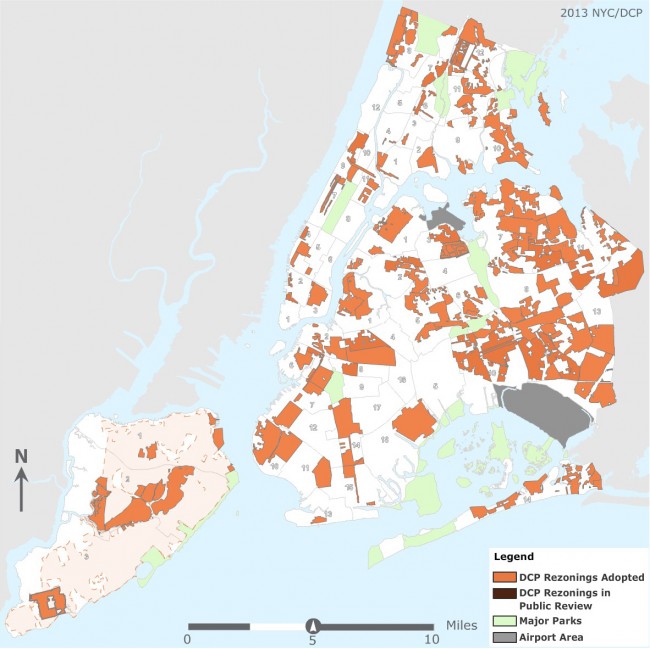
The Center for Urban Pedagogy (CUP) is a non-profit organization that uses art and design to break down complex urban issues — from street vendor regulations to perspectives on micro-apartments — into simple, accessible, visual explanations. After hearing of the difficulties its community partners had relating the complexities of zoning to their constituents, CUP set out to create a toolkit and workshop to better explain the code. The resulting What Is Zoning? toolkit is the second in CUP’s Envisioning Development series that explores topics and processes key to what is built in our cities. CUP Executive Director Christine Gaspar sat down with us to walk through the core concepts of New York City zoning, the organization’s methods for breaking down complexity and empowering citizens, and the lessons that process provides for building more inclusive, truly public processes.
Read more on Urban Omnibus
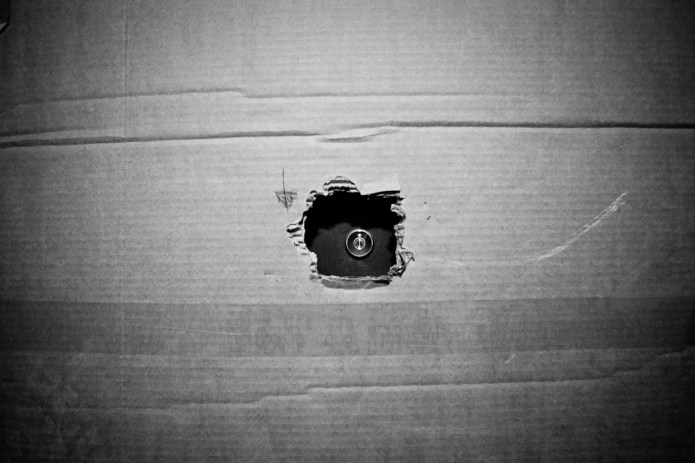
“The ideal city in the city”. This was the claim of the Zunino Real Estate, selling a dream: a passage to a modern life at the outskirts of Milan on a great promenade boulevard. A new cityscape of well-tended green areas and walking avenues, where residents could relax in cafés and mothers with their kids are all around.
However, Santa Giulia-Montecity, rather than a model of ideal city, has remained an ideal type, or rather virtual, because today the neighborhood sadly lives only in the project of its famous architect, Norman Foster. Like avatars, the renderings appear from the parallel world of internet to stress a paradoxical reality; virtually created images that become real objects themselves when they are photographed. Surreal representations that mingle with the images taken from the field and become both, imaginaries and imagined projection of the city, the same that appears in the suspended glances of those who “really” live in Milan Montecity. Far from being just a symbolic opposition, the enclosed social documentary represents an important part of this work, which is about another miserable real estate and financial scandal in the recent history of Milan.
Urban Renewal, Ethnographic Documentary, Milan
Published in i Quaderni-Urbanistica Tre, Journal of Urban Design and Planning of Università degli Studi Roma Tre, issue on Urban Representations, Year I, 3, September-December 2013, pp. 65-74. ISSN: 1973-9702

This co-authored paper combines two ethnographic experiences conducted in two Brooklyn neighborhoods, with the aim to understand the gentrification process: its plural and multidimensional character and the contextual variables. However, coming from different paradigms they are less interested in doing a comparison of their case studies than presenting how different perspectives see and problematize gentrification and urban change in the face of diversity. In this light, the paper discusses the authors’ first-hand experiences and results from the field research as in a sort of dialogue with the academic reader. Reflections on how do they see and problematize gentrification and diversity, the social effects of displacement and the role of planning conclude the paper.
Keywords: Gentrification, Urban Desire, Diversity, Brooklyn, Park Slope, Fort Greene.
Please download the full article here: «Desire for Diversity and Difference in Gentrified Brooklyn».

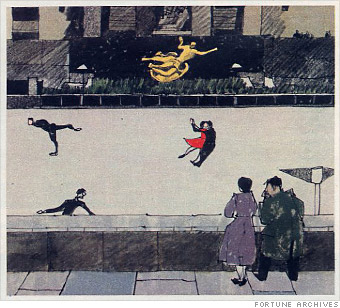
nyc_rockefeller_center
In honor of the 50th anniversary edition of Jane Jacobs’ influential book, The Death and Life of Great American Cities, Fortune has republished one of Jacobs’ earlier articles in which the urban activist laid out the case against modernist planners.
http://features.blogs.fortune.cnn.com/2011/09/18/downtown-is-for-people-fortune-classic-1958/
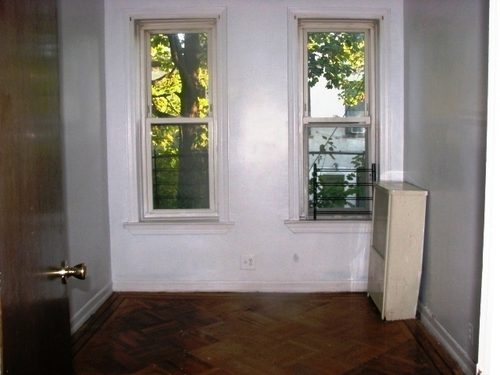
“The prettiest apartment of the bunch is in a 1890 brownstone in Sunset Park. The parlor-floor 1BR features a bay window, french doors, crown molding, ceiling medallions, and decorative fireplace. It was also recently repainted. It’s asking $1,600/month.”
Welcome back to Curbed Comparisons, a column that explores what one can rent for a set dollar amount in various New York City neighborhoods.
[Curbed NY, 11/27]
Cidades, Comunidades e Territórios, 26 (Jun/2013), pp. 16 – 39
This paper is an exploratory analysis on the role of neighbours and informal neighbour support in Italy. To be more precise, we have investigated two aspects: at the individual level, we studied the perception of neighbours, while at the family level, we were interested in understanding what kind of supportive relationships can be established between neighbours.
In the first part, we develop our theoretical framework, describing a number of factors that can influence the form and content of the neighbourly relationship, citing some results. In the second part, we use data from the Indagine Multiscopo Istat conducted in the year 2003. Regarding the level of neighbours perception, results from binomial logistic regression models indicate that, within the same socio-demographic characteristics and place of residence, there is an effect exerted by urban dimension and level of education. Urban dimension appears to have a negative effect on positive neighbours perception. However, we also found that the higher the level of education, the more likely to have a positive perception of neighbours, and this effect is higher in metropolitan areas compared to other urban areas. Interestingly, supportive relationships among Italian families who experience housing proximity, represent not only an undemanding attitude, but also an infrequent one.
Keywords: Neighbours; Informal Neighbour Support; Family Solidarity; Residential Proximity to Kin; Italy.
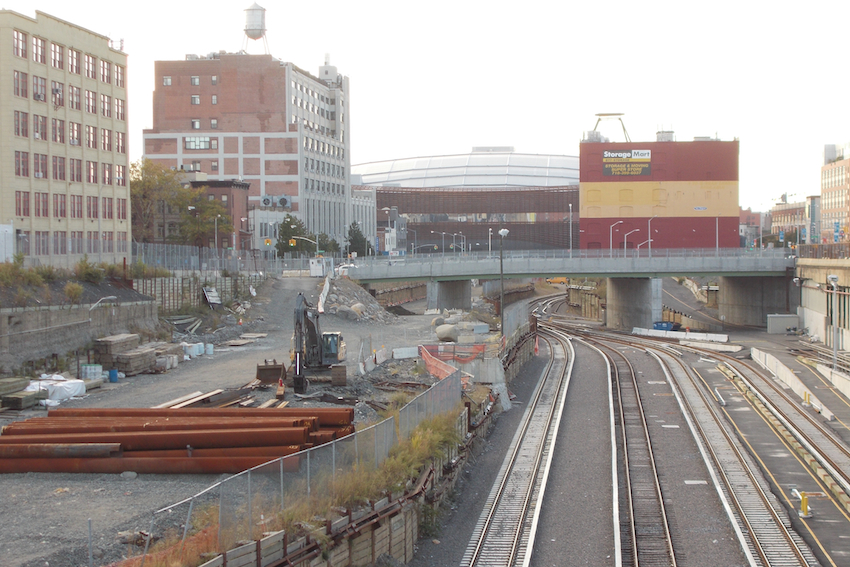
Looking west from Vanderbilt Avenue at the two-block-long railyard, with Carlton Avenue in the mid-range and the arena in the background. The Storage Mart building at right would be demolished before construction over the railyard, while the yellow building at left, currently on the block that features the above-ground arena parking lot, would be demolished. After building three towers around the arena, Forest City Ratner plans to build four on the parking lot block.
Maps don’t typically convey time very well. They’re static snapshots of a moment in history. They tell you what exists, not when people go there, or how the value of a place might be tied to time – whether it’s a nightlife district or a public park most popular with early-morning joggers.
An EU-funded project is building platforms to detect patterns in how people use urban spaces: which parts of a city come alive between midnight and 3 a.m.? How about at lunch time? And what might those patterns tell us about how individual places – and whole cities – are experienced differently over the course of a day?
Read more here:
http://www.theatlanticcities.com/technology/2013/10/mapping-time-boundaries-city/7221/

A weekday in Milan

Details about the expansion proposal
Earlier this summer, New York Methodist Hospital announced that it was planning to expand its facilities, on the eastern portion of the block bounded by 7th and 8th Avenues and 5th and 6th Streets. The hospital presented preliminary plans at a meeting held by Community Board 6 and the Park Slope Civic Council on July 11th (here’s coverage of that meeting via DNAinfo, as well as a more recent update).
 Lidia K.C. Manzo