Public seminar: How to organize a roof over one’s head when one has a low and discountinuous budget. [Come ci si organizza un tetto sulla testa se si hanno meno di 700 euro al mese?]

“I giovani e la casa a Milano”.

Seminario pubblico a cura di Massimo Bricocoli, Stefania Sabatinelli e Anna Todros

Lunedi 20 maggio, ore 15.00 – 18.15
Aula Gamma (Spazio Mostre), Via Ampère, 2, Politecnico di Milano – MM Piola

15.30-16.10, Presentazione dei lavori degli studenti del laboratorio Housing and Neighbourhoods condotto nell’ambito del corso di laurea in Urban Planning and Policy Design del Politecnico di Milano.
16.10-16.30, Commento e apertura del dibattito: Alessandro Capelli (Delegato del Sindaco alle politiche giovanili, Comune di Milano).
16.30-18.00 Tavola rotonda (moderano Massimo Bricocoli, Stefania Sabatinelli, Lidia Manzo)

20130515-154716.jpg

20130515-154729.jpg

CFP – Too Much and Too Little: Urban Landscapes of Homelessness and Gentrification

Joint session of RC21 Regional and Urban Development and WG03 Visual Sociology [host committee]

at the ISA World Congress of Sociology to be held in Yokohama 13-19 July 2014

Session Organizers
Lidia K. C. MANZO, University of Trento, Italy, lidia.manzo@gmail.com
Jerome KRASE, City University of New York, USA, JKrase@brooklyn.cuny.edu

Session in English

This session visually focuses on the intersections of inequalities in urban worlds where the competition for living space has had perverse visual effects.

Sociologists have long described how as a consequence of different life chances, groups are distributed differently in space such as in segregation and gentrification. Inequality and social justice are made visible by spatial processes of change. Whether luxurious or humble, dwellings serve important symbolic and practical functions for residents of all social classes and cultural backgrounds. In this regard Ernest Burgess’s classical urban ecological paradigm of neighborhood invasion and succession has served almost a century (1925).

Contemporarily, for Sassen and many others it is contradictions of the globalization of capital that concentrate both the more and less disadvantaged in cities where even the marginalized make claims on “contested terrain” (2001). It is also ironic that the concentrations of mobile capital in global cities have simultaneously enhanced “the potential mobility of some, while detracting from the mobility potential of others” (Sheller 2011). In a way we can say the rich get not only richer but also more mobile as the poor get poorer and relatively less so.

This session seeks submissions that critically examine, through the use of innovative visual approaches, urban vernacular panoramas that range from homelessness to gentrification. Immediate contrasts, such as the displaced or the homeless in gentrified or upscale areas, the “slumming” or “poverty tourism” phenomena, and comparative analyses are especially welcome to critically dramatize issues of Social Justice and the City (Harvey 2010).

Presenters will be asked to send a draft of their full papers (of 6000 words, including references) to session organizers by 12 June 2014 (one month prior to the conference).

If you have questions about any specific session, please feel free to contact the Session Organizer for more information.

On-line abstracts submission

June 3, 2013 – September 30, 2013 24:00 GMT.
A direct submission link will be provided in due course.

ISA Yokohama 2014

“Communities of Interest” in New York City

Check out this really neat report and related maps which explores the meaning of “Communities of Interest” in the context of redistricting the NYC Council.

The Center for Urban Research prepared a paper on behalf of the NYC Districting Commission discussing how “communities of interest” might be considered, measured, and understood in the context of drawing new City Council lines in the 2013 districting process. The paper was included in the Commission’s March 2013 submission to the US Department of Justice (see Exhibit 69 at that link) regarding the final proposed Council district lines.  We have made it available here with the permission of the Districting Commission.

You can download the paper here:

http://www.urbanresearch.org/resources/communities-of-interest-in-new-york-city

A Gun Giveaway Program, Coming to a City Near You

Major U.S. cities have gone to great lengths to get guns off their streets, whether through restrictive carry laws, police tactics, lobbying efforts, or all three. At gun buybacks from Boston to the Bay, residents can trade in firearms for cash.

A new organization out of Houston aims to do the opposite: arm entire urban neighborhoods, for free.

Read more on The Atlantic Cities (Henry Grabar, May 07 2013)

The New Economy of City-Based Top Level Internet Domains

The geography of the Internet is on the verge of a historic growth spurt, and cities will be presiding over some of its largest new territories. Dozens of municipal governments, from Durban to Taipei, have claimed corresponding top level domains (TLDs) — even the wordy ones like .amsterdam and .helsinki — in the hopes that a domain will soon become as important to the global city brand in 2020 as a website was in 2000.

Read the full article on The Atlantic Cities (Henry Grabar, May 02, 2013):

The New Economy of City-Based Top Level Internet Domains

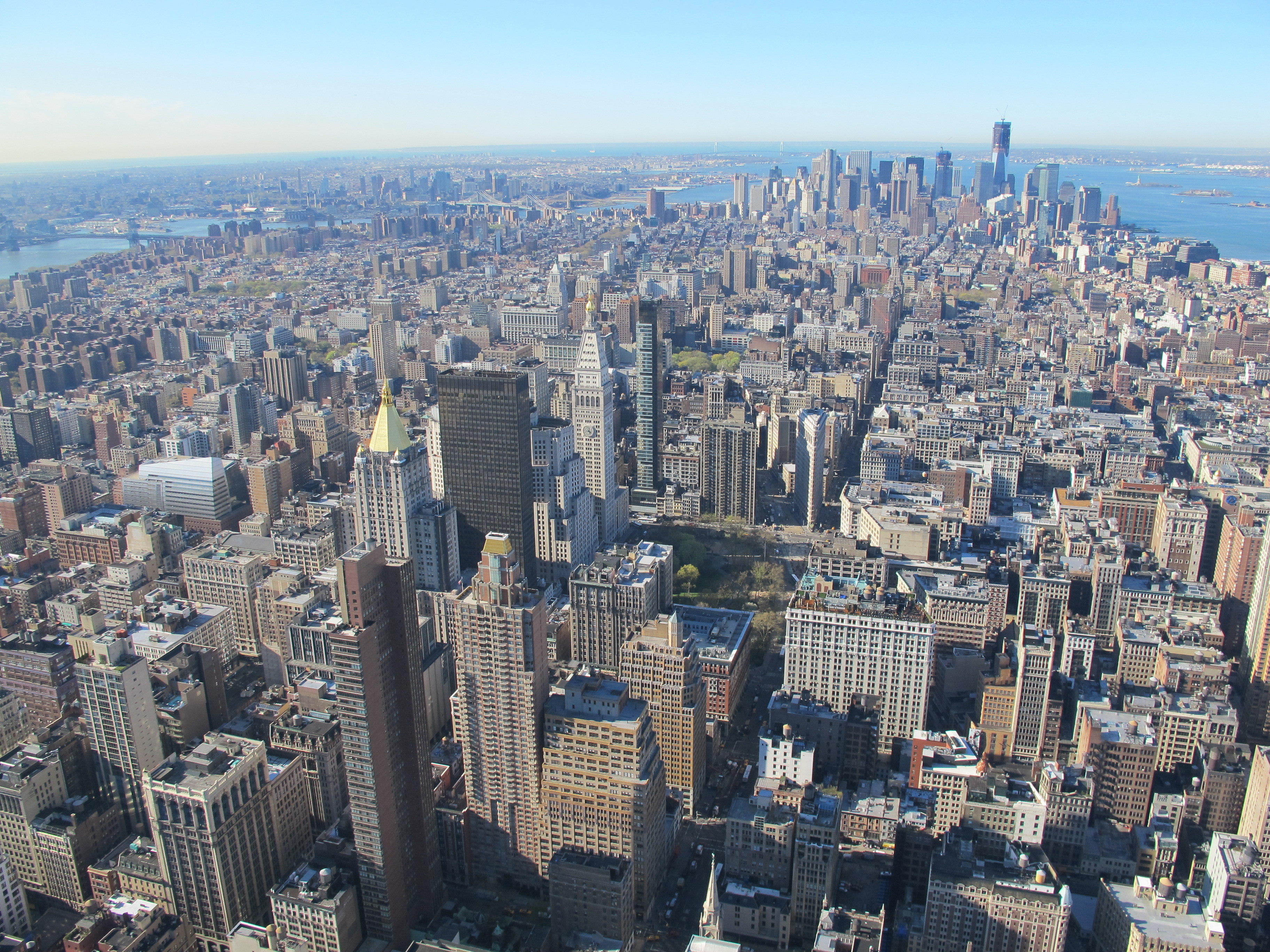
Downtown Manhattan, early morning with the Brooklyn Bridge on the background.


Material from this site can be downloaded and used with permission from the author.

Some pages are still under construction.
(c) 2011 – lidia kc manzo